



Functional Lab Testing, Mold, Podcast

328// How to Interpret ERMI Test Results in 5 Minutes

August 6, 2026

How to Interpret ERMI Test Results in 5 Minutes

If you've ever opened your ERMI test results and immediately thought...

"What am I even looking at?"

You're not alone.

Most people spend hundreds of dollars on an ERMI home test, wait weeks for results, finally open the report...

...and then stare at pages full of mold names they can't pronounce.

Aspergillus.

Chaetomium.

Stachybotrys.

Penicillium.

Now what?

Most doctors don't know how to read an Environmental Relative Moldiness Index (ERMI) report.

Many mold inspectors don't either.

And unfortunately...

A lot of people are getting advice that keeps them stuck.

I've now helped well over 150 clients navigate mold illness and hidden environmental toxicity. One thing has become incredibly clear:

You do NOT need to memorize dozens of mold species to understand your ERMI.

You simply need to know which numbers matter—and which ones don't.

Once you understand that...

You can decide your next step in about five minutes.

That's exactly what I'm going to teach you.


The Biggest Myth About ERMI Test Analysis

Let's start with something that might surprise you.

Most people are analyzing their ERMI the wrong way.

They obsess over every mold species.

They compare mold counts with strangers online.

They Google every scientific name.

They spend hours trying to figure out if one mold is "worse" than another.

Meanwhile...

They're completely missing the question that actually matters.

👉 Can you heal while living in this house?

That's the entire point.

An ERMI analysis isn't supposed to turn you into a microbiologist.

It's supposed to help you answer one practical question:

"What should I do next?"

Because that's what actually changes your health.

Not memorizing Latin mold names.


Why I Recommend the ERMI Test First

People often ask me:

"What's the best home mold test?"

After years of working with mold clients...

My answer is still the same.

Start with an ERMI test from EnviroBiomics.

Specifically, I recommend the ERMI Swiffer test because it collects settled dust throughout your living space.

Instead of testing the air for one moment in time, it looks at what has accumulated over weeks or months.

That gives you a much better picture of what's actually happening inside your home.

The process is simple.

You:

  • Use the provided Swiffer cloth.
  • Collect dust from areas that rarely get cleaned.
  • Mail the sample back.
  • Receive your ERMI test results.

That's it.

No expensive equipment.

No scheduling an inspection just to get started.

No wondering if you happened to test on a "good air day."


What Does an ERMI Test Actually Measure?

The Environmental Relative Moldiness Index, or ERMI, measures mold DNA found in household dust.

That matters because mold spores settle into dust over time.

Instead of capturing one snapshot of your home's air, the test captures your home's history.

Think of it like this.

An air sample is similar to taking one photograph.

An ERMI home test is more like watching the entire movie.

That's why I often recommend using an ERMI test before paying for a full mold inspection.

It answers the first question:

Is mold likely present in this home?

Not:

Where is it?

That's an important distinction.

The ERMI cannot tell you whether mold is under your bathroom sink...

Behind drywall...

Inside your HVAC...

Or hidden in your attic.

It simply tells you whether your home shows evidence of significant mold growth.


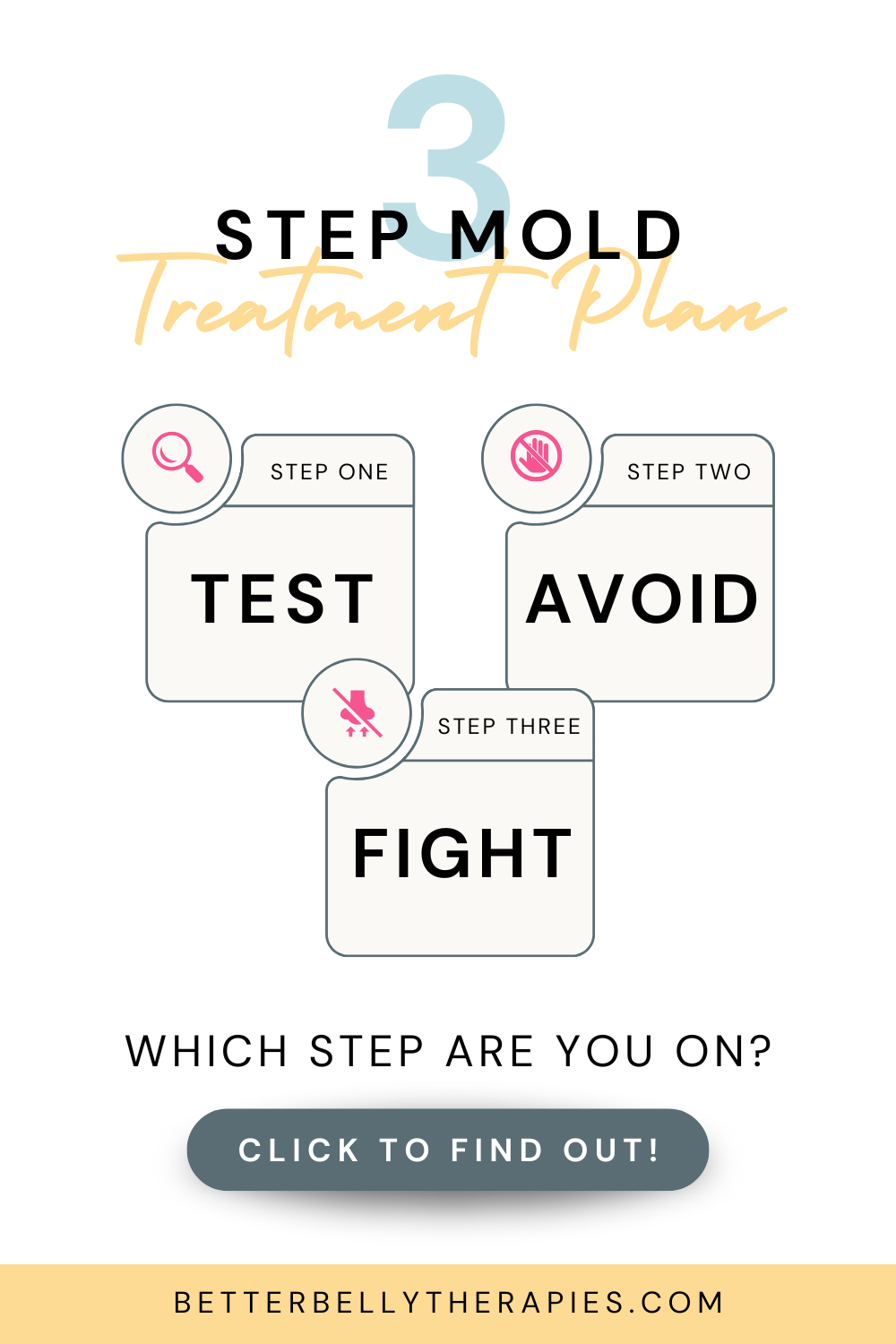
The Three-Step Mold Healing Process

One of the biggest mistakes I see is people starting in the middle.

They buy supplements.

Try binders.

Start detoxing.

Cut out foods.

Spend hundreds—sometimes thousands—of dollars.

Without ever confirming whether mold is still actively affecting them.

Here's the process I teach my clients.

Step 1: Test Your Body

First, determine whether mold is affecting you.

This tells us whether your body is carrying evidence of mold exposure.

That's incredibly valuable information.


Step 2: Test Your Home

Next comes mold testing.

This is where the ERMI test fits.

If the ERMI suggests significant mold contamination...

Then it's time to bring in a qualified mold inspector to locate the actual source.

Notice I didn't say:

"Hire an inspector first."

Because if your ERMI comes back clean...

You may have just saved yourself thousands of dollars.


Step 3: Heal Your Body

Only after you've addressed the environment should you focus heavily on rebuilding the body.

Otherwise...

You're trying to empty a sinking boat while the leak is still pouring water inside.

That rarely works.


Why So Many People Waste Money on Mold Healing

Here's something I wish every mold sufferer understood.

Supplements cannot outwork ongoing exposure.

I know that's frustrating.

But it's also freeing.

Because if you're living in a severely contaminated environment...

Your supplements aren't necessarily failing.

Your practitioner isn't necessarily wrong.

Your body isn't necessarily broken.

You're simply continuing to breathe the thing that's keeping your immune system on high alert.

Once you understand that...

Everything changes.

Instead of wondering:

"Why isn't this protocol working?"

You start asking:

"Am I still living in the problem?"

That question alone has saved many of my clients months of unnecessary frustration—and thousands of dollars in treatments that were never going to work until the environment changed.

They're all pieces of the puzzle.

The key isn't finding the "best" test.

The key is choosing the right test for the stage of healing you're actually in.


OAT Test vs. Mycotoxin Test: What's the Difference?

Let's clear this up.

These two labs often get lumped together because they're both urine tests.

That's where the similarities end.

The Organic Acids Test (OAT Test)

The Organic Acids Test, sometimes called an OAT test, is a urine-based lab.

You complete the organic acid test urine collection from home.

Many companies even provide an organic acids test kit or organic acid test kit that ships directly to your door.

The lab doesn't directly look for mold.

Instead, it measures metabolites.

These are byproducts created as your body interacts with mold.

That distinction matters.

When certain fungal metabolites appear on an organic acids test, it often suggests something much more important than simple exposure.

It suggests mold colonization.


What Is Mold Colonization?

This is where many practitioners miss the mark.

There's a huge difference between:

  • Walking into a moldy building once
  • Living with mold growing inside your body

I like to explain it this way.

Imagine breathing in one mold spore.

A healthy immune system may eliminate it.

No big deal.

Now imagine years of exposure.

Those spores begin taking hold.

They colonize your sinuses.

They colonize your lungs.

Your body becomes the environment where mold continues living.

You're no longer just exposed.

You're carrying it.

I jokingly tell clients:

"You're the moldy piece of bread."

It sounds dramatic.

But it's memorable.

And it explains why symptoms become so persistent.

The Organic Acids Test is one of my favorite ways to identify this type of long-term colonization because it often reveals what other tests completely miss.


Why I Recommend the OAT Test First

Here's where I differ from many practitioners.

Many people jump straight to a mycotoxin test.

I don't.

I recommend beginning with an Organic Acids Test first.

Why?

Because it answers the question I care about most.

Has mold actually taken hold inside your body?

If the answer is yes…

Everything changes.

Your priorities change.

Your treatment changes.

Your timeline changes.

Instead of wondering whether mold "might" be an issue…

You have evidence that your body needs a targeted strategy.

That's why, inside the Better Belly Method, the OAT test is typically the first lab I recommend for clients beginning their mold journey. It provides meaningful information early and helps avoid unnecessary testing costs.


What a Mycotoxin Test Actually Measures

Now let's talk about the other major player.

The mycotoxin test.

This is another urine-based lab.

You'll also hear it called:

  • Mycotox Test
  • Mycotoxin Test
  • Mycotoxin Test Urine
  • Mycotoxin Urine Test at Home

These tests don't measure mold itself.

Instead…

They measure mycotoxins.

Think of mycotoxins as the toxic chemicals mold produces.

Different molds produce different toxins.

Labs may identify toxins such as:

  • Ochratoxins
  • Gliotoxins
  • Aflatoxins
  • Trichothecenes

That sounds incredibly useful.

And it is.

But there's one enormous limitation.

The test cannot tell you where those toxins came from.


Here's Why That Matters

Imagine your mycotoxin urine test comes back positive.

Great.

Now ask yourself…

Did those toxins come from:

  • Your current home?
  • Your workplace?
  • A hotel you stayed in?
  • A water-damaged church?
  • An indoor swimming facility?
  • Exposure from years ago that your body is only now clearing?

The test doesn't know.

It simply shows that toxins appeared in your urine.

That's why I don't recommend using a mycotoxin test lab as your very first step.

Without context, it often creates more questions than answers.

And when you're already exhausted, the last thing you need is more confusion.


Why Starting With the Wrong Test Can Delay Healing

I understand the temptation.

You want the "best" lab.

The most comprehensive one.

The one that promises every answer.

But healing rarely works that way.

A smart testing strategy saves time because each result builds on the last.

That's why I encourage clients to think like detectives, not shoppers.

The goal isn't collecting the most labs.

The goal is collecting the right information in the right order.

In the next section, we'll walk through how to interpret an OAT test score, the hidden mold markers most practitioners overlook, and why someone can have severe mold illness even when their mold markers appear "normal."
328 vs

How to Read Your ERMI Test Results (Without Getting Lost in the Details)

Here's where most people get overwhelmed.

They open their ERMI test results and immediately see pages of mold species, colors, numbers, and charts.

It looks intimidating.

But here's the truth.

You do NOT need to understand every mold on the report.

You only need to understand a few key sections.

Let's simplify it.


The First Thing to Look At: Your ERMI Score

Every ERMI test analysis eventually comes down to one overall number.

That number is your ERMI score.

This score combines two different mold groups:

  • Group 1: Water-damage molds
  • Group 2: Common indoor molds

The report weighs each group differently before calculating your final score.

This is where many people make their first mistake.

They assume a low ERMI score automatically means their home is healthy.

Not necessarily.

We'll come back to that in a minute.


Understanding the Two Mold Groups

Group 1: Water Damage Molds

These are the molds that really get my attention.

They generally appear when moisture has been present.

That moisture could come from:

  • Roof leaks
  • Plumbing leaks
  • Flooding
  • High humidity
  • Condensation
  • Poor ventilation

In a healthy home...

You want these markers to stay in the green range.


Group 2: Common Indoor Molds

Here's something many people don't realize.

Mold exists everywhere.

You're never going to find a completely mold-free home.

That's why the ERMI includes a second category.

These common molds help balance the scoring system.

They're expected to exist at normal levels.

The ERMI subtracts these values from the water-damage molds to create the final score.

Sounds reasonable...

Until it creates problems.


Why ERMI Scores Can Be Misleading

This is probably the biggest lesson I want you to remember.

⚠️ The final ERMI score doesn't tell the whole story.

Imagine this.

Your house has extremely high levels of water-damage mold.

It also has extremely high levels of common indoor mold.

Because the common molds get subtracted...

Your overall ERMI score might actually look better than it should.

That's why I never stop at the final score.

I always ask another question.

What do the individual mold markers look like?


Don't Ignore the Individual Mold Colors

When I review an ERMI analysis, I immediately scan the color coding.

Forget memorizing mold names.

Instead, look for patterns.

Green

Normal range.

Exactly what you want to see.


Yellow

About 10 times higher than expected.

Not ideal.

But not necessarily an emergency.


Orange

Around 100 times higher than expected.

Now we're paying attention.


Red

Approximately 1,000 times higher than expected.

🚨 This is where alarms start going off.

Even a single red marker changes how I interpret the report.

Because it tells me something significant is happening inside that home.


The HERTSMI-2 Score Matters Too

Most ERMI tests from EnviroBiomics also include something called the HERTSMI-2.

Don't skip it.

The HERTSMI looks specifically at five of the most concerning water-damage molds.

These include molds like:

  • Stachybotrys
  • Chaetomium
  • Aspergillus species
  • Wallemia
  • Other high-risk species included in the HERTSMI scoring system

Rather than looking at dozens of molds...

It focuses on the biggest troublemakers.

Generally speaking:

  • 10 or below is the goal.
  • 11–15 deserves attention.
  • Above 15 usually signals significant concerns.

Again...

Don't obsess over every species.

Focus on what the overall picture is telling you.


My Simple Three-Category ERMI Framework

After reviewing countless ERMIs over the years...

I've found most reports fit into three practical categories.

Not twenty.

Not fifty.

Just three.

This framework makes decision-making dramatically easier.


Category 1: Bad ERMI

This is the easiest one to identify.

I consider your home in the bad category if:

  • Your ERMI score is around 20 or higher
  • You have one or more red mold markers
  • You have several orange markers throughout the report

When I see this...

Everything changes.

Because I've consistently observed something with clients living in homes like this.

Protocols barely move the needle.

People try:

  • Gut healing
  • Histamine protocols
  • Mineral balancing
  • Candida protocols
  • Detox supplements

Yet they continue feeling miserable.

Sometimes...

They actually feel worse.

Over time, I started noticing the same pattern repeatedly.

Clients living in homes with ERMI scores around 20 or higher often experienced very little improvement until they addressed the environment itself.


Why This Matters So Much

This isn't meant to scare you.

It's meant to save you money.

Imagine spending:

  • $2,000 on supplements
  • $1,500 on functional testing
  • Six months changing your diet

...only to discover your biggest problem was still sitting behind your drywall.

That's heartbreaking.

And unfortunately...

It's incredibly common.

Your body cannot continually recover if it's constantly being exposed to the thing making you sick.


Category 2: Mixed ERMI

This is actually where many people land.

A mixed ERMI usually looks something like this:

  • ERMI between about 5 and 20
  • Mostly green and yellow markers
  • Maybe one orange marker
  • HERTSMI still elevated

These homes aren't ideal.

But they're different from the "bad" category.

Here's why.

I often see these clients improve while working through protocols.

Their constipation improves.

Their energy improves.

Their digestion improves.

Their histamine symptoms calm down.

But eventually...

Progress stalls.

They often reach about 50% improvement.

Then everything plateaus.

Why?

Because the environment continues placing stress on the immune system.

Eventually, that exposure becomes the limiting factor.


Category 3: Good Enough

Now for some encouraging news.

I don't believe your ERMI has to be perfect.

In fact...

I think social media has created unnecessary fear around this topic.

Some people insist you need a negative ERMI score before your body can heal.

That simply hasn't matched what I've seen in practice.

I've watched clients—including myself—recover in homes that weren't perfect.

They were simply good enough.

And sometimes...

Progress beats perfection every single time.

In the next section, I'll show you exactly what action to take for each ERMI category, share my own mold story, explain why an ERMI of 4.8 helped my family recover, and cover practical next steps for remediation, air purification, and healing your body after mold exposure.


328 quote

What to Do Next Based on Your ERMI Score

This is the part most people skip.

They spend hours trying to understand their ERMI test analysis...

...but never decide what action to take.

Remember:

Information doesn't change your health.

Action does.

Here's how I approach each category.


If You Have a "Bad" ERMI

Let's define "bad" again.

Generally, this means:

  • An ERMI around 20 or higher.
  • One or more red mold markers.
  • Multiple orange markers.
  • A HERTSMI that's significantly elevated.

When I see this...

I tell clients something that often surprises them.

Your environment comes first.

Not supplements.

Not detox.

Not another expensive functional lab.

Your environment.

Because if you're continuously breathing mold...

Your body never gets a real chance to recover.

That may feel discouraging.

But it's actually empowering.

Why?

Because now you know why your body hasn't responded.

It wasn't because you failed.

It wasn't because you picked the wrong probiotic.

It wasn't because your body is "too broken."

Your body has simply been trying to survive.


My Biggest Recommendation: Get Out or Get It Fixed

If your ERMI falls into the bad category...

Make improving your environment your highest priority.

That could mean:

  • Hiring a qualified mold inspector
  • Beginning remediation
  • Temporarily staying elsewhere
  • Moving if necessary
  • Reducing exposure while repairs happen

I've had clients:

  • Stay with family.
  • Rent Airbnbs.
  • Couch surf.
  • Delay moving back until remediation finished.

Every situation looks different.

But one thing stays the same.

Lower exposure almost always creates better healing opportunities.


Support Your Home While You Make Changes

You don't have to sit around doing nothing.

There are practical steps you can start today.

These include:

  • Opening your windows daily when weather allows.
  • Keeping humidity under control.
  • Using a dehumidifier.
  • Running photocatalytic oxidation (PCO) air purification.
  • Following proper remediation guidance.

I'm personally a fan of PCO technology because it doesn't simply trap contaminants.

It helps break them down.

That makes it very different from a traditional HEPA filter.


What If You Have a Mixed ERMI?

This is where things get encouraging.

Clients with a mixed ERMI often can begin healing.

They don't necessarily need to pause everything until remediation is complete.

Instead, we usually work on both.

That may include:

  • Supporting stomach acid.
  • Addressing hidden gut infections.
  • Rebuilding mineral status.
  • Correcting nutrient deficiencies.
  • Supporting healthy detox pathways.

At the same time...

They're also improving their environment.

Maybe they schedule an inspection.

Maybe they install better air purification.

Maybe they decide not to renew their lease.

Healing and environmental cleanup happen together.

That's very different from someone living in an extremely contaminated home.


Why I Don't Chase Perfect ERMI Scores

Here's where I'm probably going to disagree with part of the internet.

I don't believe everyone needs a negative ERMI.

Could some extremely sensitive people benefit from one?

Possibly.

But that's not what I've consistently seen in practice.

Instead...

I ask a different question.

Is this home good enough for your body to recover?

Because those aren't always the same thing.


My Own ERMI Story

When my mold symptoms became severe...

I developed:

  • Daily headaches
  • Dizziness
  • Tinnitus
  • Sinus pressure
  • Neck pain
  • Muscle pain

I eventually tested the home.

Interestingly...

The ERMI wasn't dramatically high.

It landed around 9.5.

The HERTSMI was 14.

Not terrible.

Not great.

Just...

Mixed.

When we moved into a cleaner apartment...

Our new ERMI measured about 4.8.

Still not negative.

Still not perfect.

Yet something incredible happened.

My tinnitus improved.

My daughter's weekly vomiting stopped.

Her nosebleeds disappeared.

Our health started moving in the right direction.

That's why I believe in progress over perfection.


If Your ERMI Is Good Enough but You're Still Sick

This is another place where people get stuck.

They assume:

"My ERMI is low...

...therefore mold must still be the problem."

Not always.

Sometimes it is.

Sometimes it isn't.

If you've addressed mold appropriately and your ERMI home test looks good...

It's time to ask bigger questions.

Could it be:

  • Hidden gut infections?
  • Copper toxicity?
  • Heavy metals?
  • Endotoxins?
  • Hormone dysfunction?
  • Nutrient deficiencies?
  • Another environmental toxin?

Mold isn't the only root cause.

It's simply one important piece of the puzzle.


Quick Recap

If you remember nothing else from this article, remember this:

  • ✅ Start with an ERMI test if you suspect mold in your home.
  • ✅ The ERMI by EnviroBiomics is one of my favorite starting points for home mold testing.
  • ✅ Don't obsess over every mold species.
  • ✅ Focus on your ERMI score, individual marker colors, and HERTSMI.
  • ✅ A score around 20+ usually means environmental changes should become your priority.
  • ✅ Mixed ERMIs often allow healing to begin while remediation is underway.
  • ✅ "Good enough" is often enough for significant healing.
  • ✅ Progress beats perfection every time.
  • ✅ If your ERMI looks good but you're still sick, investigate other root causes.

Frequently Asked Questions

What's the best home mold test?

For most people, I recommend starting with an ERMI test from EnviroBiomics because it evaluates settled dust throughout the home rather than a single air sample.


How much does an ERMI test cost?

The exact ERMI test cost depends on the laboratory and options you choose. Check directly with the testing provider for current pricing.


Can I do an at-home mold test myself?

Yes. An ERMI Swiffer test is designed to be completed at home. You collect dust using the supplied materials and mail it to the laboratory for analysis.


Does an ERMI tell me where the mold is?

No.

An ERMI tells you whether mold contamination is likely present in your living space.

It does not identify the exact location of the mold. A qualified mold inspection is the next step if your ERMI suggests a significant problem.


Do I need a negative ERMI to heal?

Not necessarily.

In my clinical experience, many people improve significantly in homes that are "good enough," even if the ERMI isn't negative. The goal is reducing exposure enough for your body to recover while also addressing any remaining root causes.


Ready to Stop Guessing?

If you've been chasing symptoms for months—or years—without real answers, don't let your ERMI become another confusing report sitting in a folder.

Inside the Better Belly Blueprint, you'll learn exactly how to:

  • Interpret your functional lab testing.
  • Understand your mold testing results.
  • Know which healing priorities come first.
  • Create a step-by-step plan based on your body's unique needs.
  • Avoid wasting thousands on unnecessary supplements and treatments.

You don't have to figure this out alone.

Learn more about the Better Belly Blueprint and start healing with a clear roadmap instead of endless trial and error.


Related Resources

For readers who want to dive deeper, naturally link to:

  • Better Belly Blueprint
  • VIP Program
  • Mold Podcast Episode Vault
  • How to Test Your Body for Mold
  • The 3-Step Mold Healing Plan
  • Signs of Hidden Mold in Your Home
  • How Mold Affects Gut Health
  • Tinnitus and Mold Exposure

About the Author

Written by Allison Jordan, FDN-P

Allison Jordan is a Functional Diagnostic Nutrition Practitioner (FDN-P), gut health expert, and founder of Better Belly Therapies. She has helped more than 150 clients uncover hidden root causes behind chronic digestive symptoms, mold illness, hormone imbalances, fatigue, and autoimmune conditions using a functional, testing-first approach. Through the Better Belly Blueprint and VIP coaching programs, Allison teaches people how to heal the body by addressing the true sources of illness—not simply managing symptoms.

328 title
Can you read an ERMI test yourself? Yes! Here's how to interpret ERMI test results from your Envirobiomics home mold test in 5 minutes or less.


EPISODES MENTIONED:

WORK WITH US:

Option #1) 👉 Join the Better Belly Blueprint today!
Option #2) 👉 Work long-term, 1:1 with us as a Better Belly VIP client (Pay-in-full and payment plan options available)

RESOURCES:


LINKS:


SHOW US YOUR LOVE:

  • If this podcast episode made positively impacted you, please leave a Rating and Review for the podcast. It'd mean so much! ❤️

 

*This episode was first published at BetterBellyTherapies.com/328

Subscribe to our Weekly Podcast Newsletter 💌

Share your name and email below, and we'll share our new podcast episodes with you - every week!

Leave a Reply

Your email address will not be published. Required fields are marked *