




Postbiotics for Gut Dysbiosis: Do They Work?
The gut health industry LOVES a shiny new supplement. 🙃
First it was probiotics.
Then prebiotics.
Now?
Postbiotics.
And suddenly everyone online claims they’re the missing key to fixing your gut.
But here’s the problem…
Most people buying postbiotics still have:
- bloating
- constipation
- diarrhea
- acid reflux
- food sensitivities
- abdominal pain
- “gut dysbiosis”
So if postbiotics are so revolutionary…
Why are people still struggling?
Here’s the truth nobody wants to say out loud:
You cannot supplement your way out of a root-cause gut problem.
And yes — I said it.
Because after working with hundreds of clients worldwide through the Better Belly Blueprint, I’ve seen something over and over again:
People waste YEARS chasing trendy gut supplements while ignoring the real reasons their gut stopped functioning properly.
So let’s break this down.
What are postbiotics really?
Can they help?
Can they make symptoms worse?
And what actually works for long-term gut healing?
Let’s get into it.
What Are Postbiotics? (And How They Differ From Probiotics and Prebiotics)
Most people already know these two terms:
- Probiotics = live bacteria
- Prebiotics = food for bacteria
But postbiotics?
That’s where confusion starts.
Here’s the simplest explanation possible:
Postbiotics are compounds bacteria produce after they digest and metabolize nutrients.
Or, in less scientific language…
They’re basically bacterial byproducts.
Not glamorous.
But accurate. 😂
These compounds may support:
- gut lining health
- inflammation balance
- immune function
- colon health
- microbial communication
Some common postbiotics include:
- Butyrate
- short-chain fatty acids (SCFAs)
- bacterial cell fragments
- antimicrobial peptides
- certain vitamins
And here’s the funny part…
You’ve already consumed postbiotics your entire life.
Butter naturally contains butyrate.
Certain fermented foods contain postbiotic compounds.
Some multivitamins even include bacterial-derived nutrients.
So despite the marketing hype, this concept is NOT new.
The term “postbiotic” only became officially defined in 2021 by the International Scientific Association for Probiotics and Prebiotics.
But researchers explored bacterial byproducts for over 100 years before that.
This matters because the wellness industry often rebrands old concepts into “new breakthroughs.”
And honestly?
That’s exactly what this feels like.
Why Postbiotics Became Popular for Gut Dysbiosis and IBS Symptoms
If you search TikTok, Instagram, or Google right now, you’ll see postbiotics marketed for:
- IBS
- SIBO
- gut dysbiosis
- bloating
- inflammation
- leaky gut
- acid reflux
- immune support
Sounds amazing, right?
But here’s where things get messy.
“Gut dysbiosis” itself is not actually a root cause.
It’s a description.
It simply means:
“The gut microbiome is out of balance.”
Okay… but WHY?
That’s the real question.
Because your gut doesn’t randomly become dysfunctional for fun.
Something drove the imbalance.
And if you never address that deeper issue, you’ll stay stuck in the supplement hamster wheel forever.
This is where I start challenging conventional gut health advice HARD.
Because mainstream wellness culture tells people:
- take probiotics
- eat fermented foods
- add fiber
- drink kombucha
- try butyrate
- buy another supplement
Meanwhile…
The person still can’t tolerate normal meals.
Still bloats after eating.
Still feels exhausted.
Still reacts to foods.
Still depends on digestive aids.
That’s not healing.
That’s symptom management.
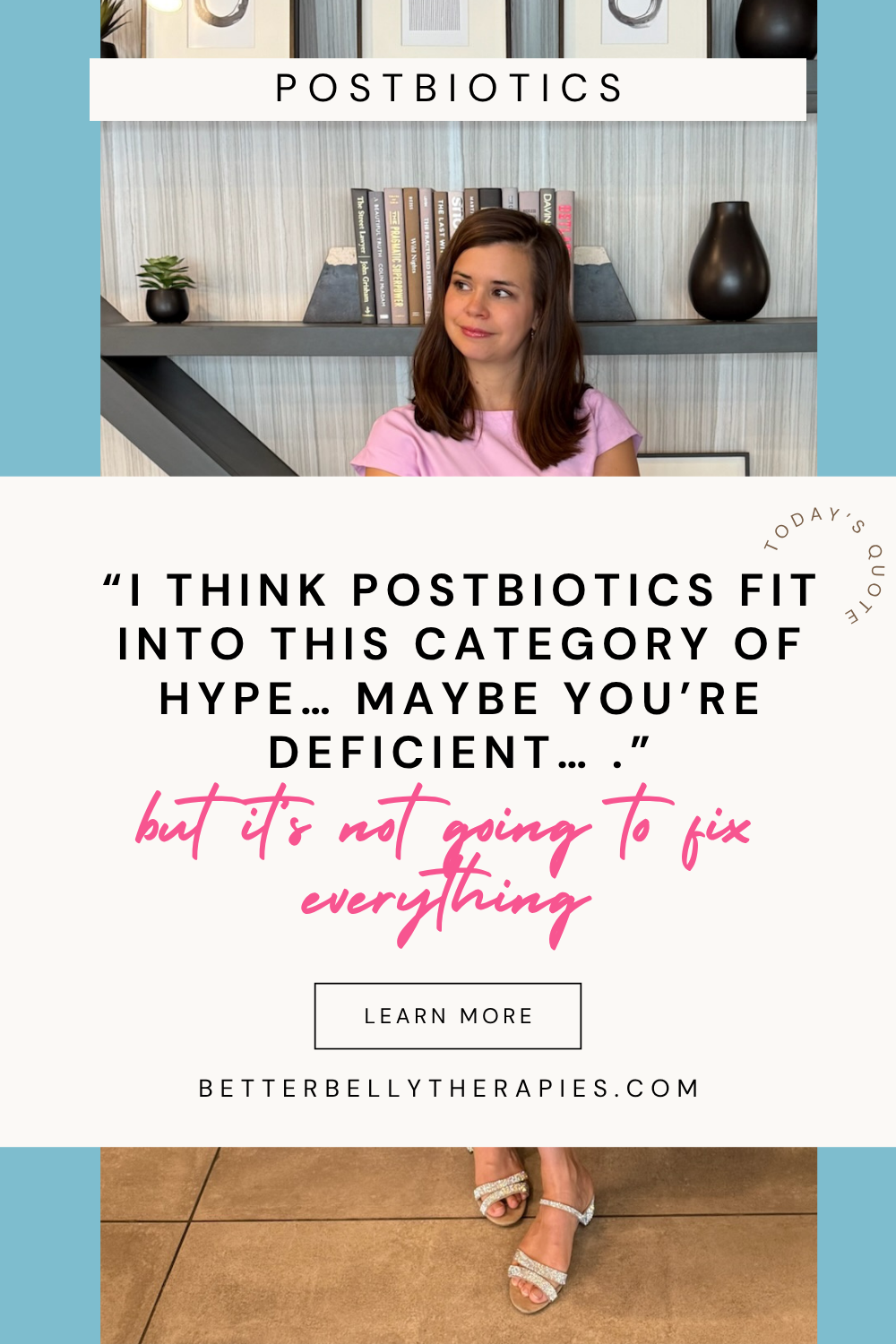
And honestly? Sometimes these products make people WORSE.
The Butyrate Problem: Why Some People Feel Worse on Postbiotics
Let’s talk about the most famous postbiotic:
Butyrate
The internet treats butyrate like a miracle.
And yes — butyrate DOES matter.
Research links it to:
- colon cell health
- inflammation balance
- gut lining support
- microbiome function
But here’s what almost nobody tells you:
Some people feel TERRIBLE on butyrate supplements.
I’ve seen this repeatedly in clients.
They start butyrate expecting relief…
Then suddenly experience:
- worse bloating
- abdominal pressure
- digestive discomfort
- increased gut symptoms
And this isn’t just anecdotal.
Researchers observed similar issues in people with severe inflammatory gut conditions, including:
- Crohn's Disease
- Ulcerative Colitis
In highly inflamed guts, butyrate sometimes aggravates symptoms instead of helping.
That’s HUGE.
Because it proves something important:
Even “good” gut supplements can backfire when the body isn’t ready.
This is why blind supplementation frustrates me so much.
People assume:
“Natural” automatically means safe and effective.
Nope.
Your body is a system.
Timing matters.
Context matters.
Root causes matter.
And this is exactly why trendy gut protocols fail so many people.
Root Causes of Gut Dysbiosis (Mold, SIBO, Toxins, and Nervous System Stress)
Here’s what I’ve seen actually drive chronic gut issues:
- mold exposure
- mycotoxins
- SIBO
- chronic infections
- nervous system dysregulation
- toxin overload
- nutrient deficiencies
- poor bile flow
- stress physiology
- immune dysfunction
THIS is the real conversation.
Not:
“Should I buy another probiotic?”
Because healthy guts naturally create their own postbiotics.
That’s the goal.
Your body should self-regulate.
A healthy microbiome naturally:
- produces short-chain fatty acids
- supports digestion
- balances inflammation
- maintains microbial diversity
You shouldn’t need endless supplementation forever.
And honestly?
This is where the wellness industry loses people.
They normalize lifelong dependency on products.
But true healing should make your body MORE resilient over time.
Not more fragile.
That’s why inside the Better Belly Blueprint, we focus on identifying what I call the Five Toxin Traps.
These are the hidden stressors blocking your body’s ability to self-heal.
You can learn more about the Better Belly Blueprint and the Five Toxin Trap training here:
Better Belly Therapies Training
Because once you remove the barriers…
The body often starts regulating itself again.
And THAT is where long-term transformation happens.
Why Probiotics, Prebiotics, and Postbiotics Often Fail
This part surprises people.
I’m not anti-supplement.
I use targeted tools strategically.
But I AM against random supplement stacking.
Especially when someone:
- hasn’t identified root causes
- keeps reacting to foods
- still has inflammation
- feels chronically stressed
- has unresolved infections or toxins
At that point, adding probiotics or postbiotics often becomes noise.
Sometimes expensive noise.
And yes — there are people who genuinely benefit from certain gut supplements.
But the bigger question is:
Why does your body need them in the first place?
That’s the conversation most practitioners skip.
Because it’s easier to sell products than solve complex root-cause physiology.
But real healing often looks far less glamorous than social media promises.
Sometimes it means:
- improving drainage pathways
- supporting detoxification
- calming the nervous system
- rebuilding mineral status
- addressing mold exposure
- restoring stomach acid
- improving bile flow
- fixing sleep patterns
Not exactly sexy Instagram content. 😂
But effective?
Absolutely.
And honestly, this is why so many people stay stuck despite “doing everything right.”
They’re chasing microbiome hacks while ignoring foundational dysfunction.
What Actually Heals the Gut Long-Term
I want to give you a vision of what real gut healing can look like.
Because many people assume:
- strict food rules forever
- endless supplements
- constant restriction
- complicated biohacking routines
- expensive wellness gadgets
But healthy digestion should feel NORMAL.
You should:
- enjoy meals
- tolerate foods
- travel without fear
- eat dessert occasionally
- stop obsessing over every ingredient
That’s the goal.
Not perfection.
Not wellness anxiety.
Not living inside a supplement cabinet.
I recently reversed a dairy sensitivity I carried for nearly 10 years.
And I didn’t do it through trendy postbiotics.
I addressed the underlying dysfunction first.
That’s what creates lasting change.
If you suspect issues like:
- SIBO
- mold toxicity
- chronic inflammation
- nervous system stress
- food sensitivities
- gut dysbiosis
Then stop asking:
“What supplement should I take?”
And start asking:
“What’s preventing my body from regulating itself?”
That question changes EVERYTHING.
You can also explore the Better Belly Therapies podcast episode vault for more deep dives into:
- SIBO
- mold illness
- sulfur sensitivity
- detoxification
- nervous system healing
- food reactions
Better Belly Therapies Podcast
Quick Recap
Here’s what to remember about postbiotics and gut healing:
- Postbiotics are bacterial byproducts, including butyrate and short-chain fatty acids
- The concept isn’t new, despite recent marketing hype
- Some people benefit from postbiotics temporarily
- Others feel WORSE on products like butyrate
- Gut dysbiosis is not the root cause
- Mold, SIBO, toxins, inflammation, and nervous system stress often drive chronic symptoms
- Healthy guts naturally create their own postbiotics
- Long-term healing requires addressing WHY the gut became dysfunctional
Bottom line?
Don’t build your healing strategy around trendy supplements.
Build it around root-cause restoration.
FAQ
Can postbiotics help gut dysbiosis?
They may temporarily support symptoms for some people. But they rarely address the root cause of gut dysbiosis long-term.
What’s the difference between probiotics and postbiotics?
Probiotics are live bacteria. Postbiotics are compounds bacteria produce after digestion and metabolism.
Can butyrate make bloating worse?
Yes. Some people experience worse bloating and digestive symptoms when taking butyrate supplements.
Are postbiotics better than probiotics?
Not necessarily. Neither fixes underlying gut dysfunction by itself. Root-cause healing matters more.
What actually heals the gut naturally?
Addressing hidden drivers like mold, SIBO, nervous system stress, toxin overload, and nutrient deficiencies creates more lasting healing.
About the Author
Written by Allison Jordan, FDN-P — gut health specialist and founder of Better Belly Therapies. Allison helps women uncover the real root causes behind chronic digestive symptoms using functional medicine and root-cause healing strategies.
RELATED EPISODES:
- Ep. 3// Why Probiotics Aren’t Healing Your Gut
- 235// SIBO Symptoms, SIBO Testing, and Why SIBO Treatments Fail
WORK WITH US:
-
- Want to learn how BBB works? Watch this FREE training walking you through how to heal, once and for all!
-
- Want to make sure that VIP is right for you? Book a FREE 20 Min Application Call!
RESOURCES:
- Learn Your 5 Toxin Trap - And How to Finally Heal Your Gut
- Subscribe to our Weekly Podcast Newsletter
- Download the entire Better Belly Podcast Vault!
- Grab my FREE 60+ Page Family Recipe Book (Gluten Free, Grain Free, and Dairy Free!)
LINKS:
- JOIN → Join our FREE Facebook Group
- FOLLOW → @betterbellytherapies
- ASK → Ask a Question for the Podcast
- WORK WITH US → betterbellytherapies.com
SHOW US YOUR LOVE:
- If this podcast episode made positively impacted you, please leave a Rating and Review for the podcast. It'd mean so much! ❤️

+ view comments . . .